Individualised Learning & Differentiation

Recognising Individual Needs and Providing Targeted Support

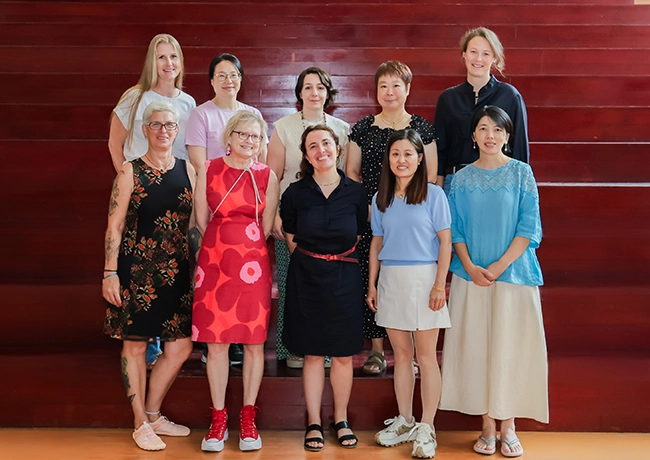
Our aim is to support every child and young person holistically, taking their individual abilities and needs into account so that everyone can reach their full potential. To achieve this, we have developed a forward-looking support programme delivered by our experienced team of special education teachers and learning support specialists. Close collaboration is central to our approach. Our team works closely with all educational staff, German as a Second or Foreign Language (DaZ/DaF) teachers, parents, students and external partners, including an occupational therapist and a speech and language therapy practice.

Learning Support Across All School Levels

From the Start of Kindergarten

To identify learning potential and possible developmental delays at an early stage, our learning support specialists and language support team regularly work alongside children in their kindergarten groups. This enables us to provide targeted early support and inclusive learning opportunities tailored to each child’s needs.

Starting School with Team Teaching

A positive start to school is essential. In our established team-teaching model in Grade 1, special education teachers work alongside classroom teachers to provide additional support during lessons. This allows each class to respond closely to individual learning needs and give every child the attention and support they need to thrive.

Supporting. Guiding. Empowering.

We provide tailored support throughout a student's educational journey, from the early years through to graduation. Support takes place both in the classroom and through individual sessions, depending on each student's needs. Working closely with everyone involved, we help students develop personal, social, cognitive and methodological skills, enabling them to navigate everyday school life and work towards their desired qualification.

Our Support Programmes in Detail:

To identify learning potential and possible developmental delays at an early stage, a learning support specialist works alongside the team in our kindergarten. In close collaboration with educators across all groups and the language support team, they plan and coordinate early intervention and inclusive support in both nursery and kindergarten groups. Support is available to children experiencing difficulties in physical and motor development, cognitive development or emotional and social development, as well as those who show challenges with concentration, independence or everyday practical skills. As these areas often overlap, every child is considered holistically.

Depending on their age and individual needs, children receive support either one-to-one or in small groups integrated into their daily kindergarten routine. Activities are playful, motivating and collaborative, always tailored to each child's needs. Support measures are planned and reviewed through regular developmental meetings with parents and case discussions involving the learning support specialist, educators and German as a Second Language (DaZ) teachers.

Close cooperation also ensures a smooth transition to preschool. Structured handover meetings with the relevant preschool educators help maintain continuity so that each child's support can continue seamlessly.

Regular observations during everyday preschool activities help us identify children who may need additional support at an early stage. A dedicated learning period is included in the weekly schedule to introduce children to school routines and prepare them for the transition to primary school. During this time, they develop early literacy and numeracy skills that lay the foundations for reading, writing and mathematics. The special education teacher responsible for preschool observes the children closely each week and regularly consults with preschool educators to identify whether additional support is needed in specific developmental areas, such as motor skills or phonological awareness. This support is delivered through playful, low-pressure activities and, wherever possible, inclusively within the group.

Towards the end of the school year, the primary school leadership, preschool educators, language support staff and special education teacher meet to review each child's development. They discuss any additional support needs and assess school readiness based on the results of the school-entry assessment. Detailed handover meetings between preschool and primary school are also held for every child. These help ensure a smooth transition and give everyone involved a clear understanding of each child's developmental progress and individual needs.

To meet the diverse needs of all children, our primary school consistently applies a team-teaching approach in the early grades. Classroom teachers work alongside special education teachers and other educational specialists during lessons. This additional staffing allows children to receive targeted support and individual attention.

From Grade 2 onwards, learning support specialists provide individual guidance to children, whether or not they have identified additional support needs. They work alongside teachers in the classroom or with small groups, helping students consolidate their learning or providing additional challenges for those who are ready to progress further. This structured collaboration creates a flexible learning environment that enables differentiated, child-centred teaching.

In secondary school, students continue to receive support tailored to their individual needs. This may take place within the classroom, in small groups or through one-to-one sessions, depending on the type of support required.

Individual learning support is an additional service for children and young people whose needs cannot be adequately met through the school's general support programmes alone. It is also available to students diagnosed with dyslexia or dyscalculia, as well as those with identified difficulties in learning and working habits. Students who join the German School Shanghai from other schools during the academic year may also benefit from individual support to help them catch up and integrate more quickly into their new class.

An individual support plan is created for every child with special educational needs. At the end of each semester, progress is reviewed to assess whether the objectives set out in the plan have been achieved. The methods and measures included in each plan are discussed with parents in advance and, where necessary, with the teachers involved. Individual learning support is subject to a fee. It usually takes place during regular lesson time for students in Grades 1–4. In secondary school, sessions are generally scheduled within the designated support periods for each grade level. In exceptional cases, support may take place outside regular lesson time.

Atelier Time – Discover Interests. Develop Strengths.

Atelier Time is a key part of our approach to individualised learning. Four days a week, students choose from a wide range of learning and elective ateliers tailored to their interests and individual learning needs. In learning ateliers, students work with their teachers to deepen their knowledge and develop subject-specific and interdisciplinary skills. Elective ateliers offer activities designed by teachers, parents and external providers – and, increasingly from Grade 4 onwards, by the students themselves. Leading an atelier gives students the opportunity to take responsibility and develop their teaching, organisational and social skills. Atelier Time offers students at the German School Shanghai a flexible range of opportunities to develop their strengths and abilities at their own pace, while fostering a strong sense of community across year groups.

Individualised Language Support

Our comprehensive language development programme is an important part of our learning support provision and includes German as a Foreign Language (DaF) and German as a Second Language (DaZ). Our experienced language support team works with children from the very beginning of kindergarten, supporting those who have little or no knowledge of German and continuing to guide them throughout their school years. The aim is to build confidence in German and enable every child to participate in school life and engage with the wider social and cultural community from the outset.

A Holistic Approach to Support

Parent Guidance and Advice

When a child shows behavioural difficulties or struggles with learning, our learning support team works with parents to develop practical strategies for use at home, where needed. These approaches are reviewed together and adapted as necessary.

Counselling for Teachers​

All teaching staff can consult our learning support team for advice. Where more extensive support is required, the team works with teachers to develop strategies tailored to the needs of the class. The school also regularly offers internal professional development sessions on topics such as dyslexia and dyscalculia.

Working with External Specialists

An external occupational therapist regularly provides therapy sessions across our school. In kindergarten, sessions are integrated into the daily routine; in primary school, they take place during or after lessons, and in secondary school, usually after the school day. Costs are generally covered by insurance, with billing handled directly by the therapist. We also work with external speech and language therapy providers. Sessions are available online in German and in person in English or Chinese.

Prevention & Counselling

Our school social work team provides a trusted point of contact for students facing challenges at school or dealing with everyday worries. They offer guidance, encouragement and support, helping children and young people develop personally and socially.

Join Our Team

Would you like to become part of our experienced team and contribute your expertise to the German School Shanghai? Visit our careers portal to explore current vacancies. Can't find the right position? We also welcome speculative applications.